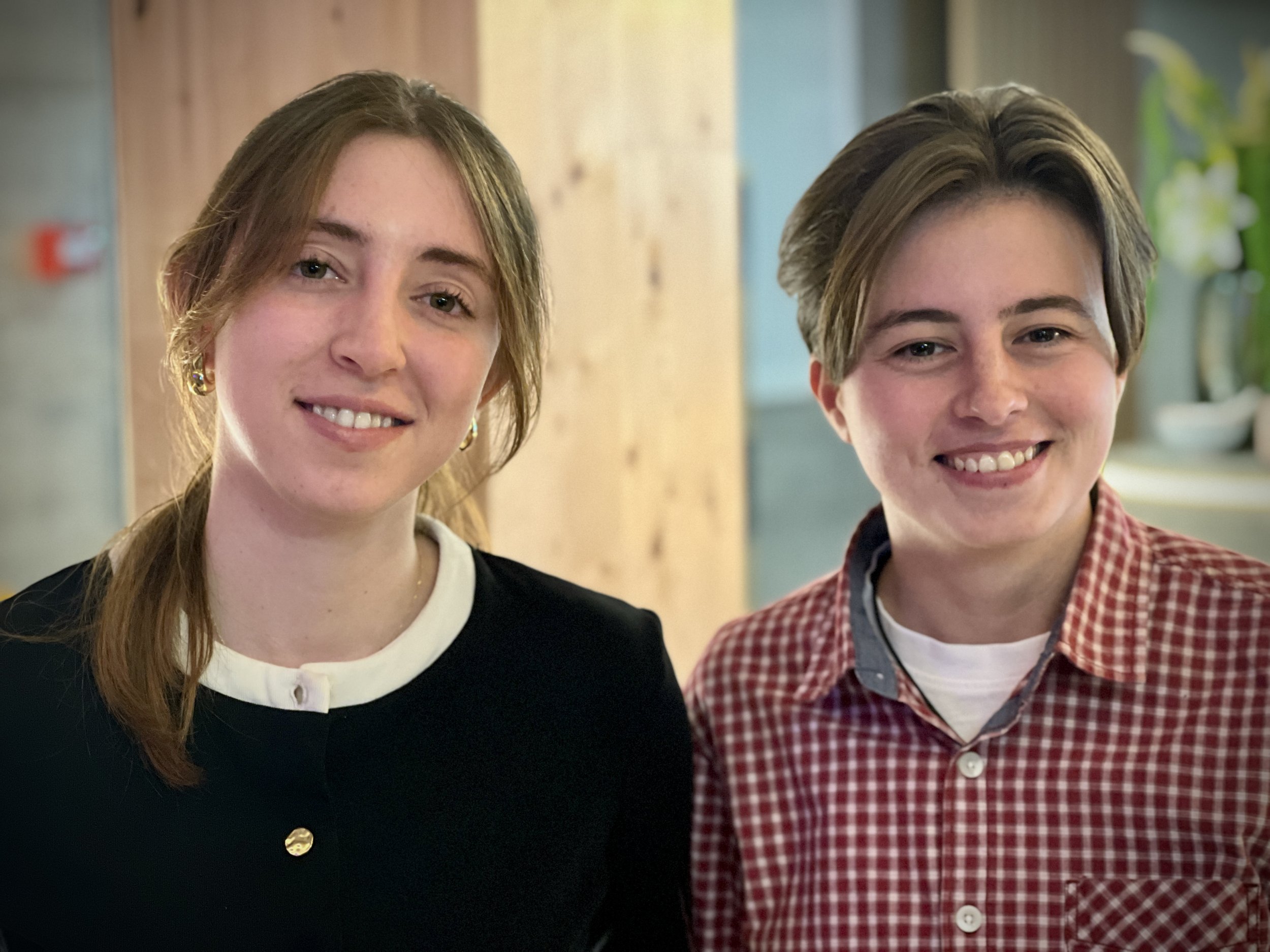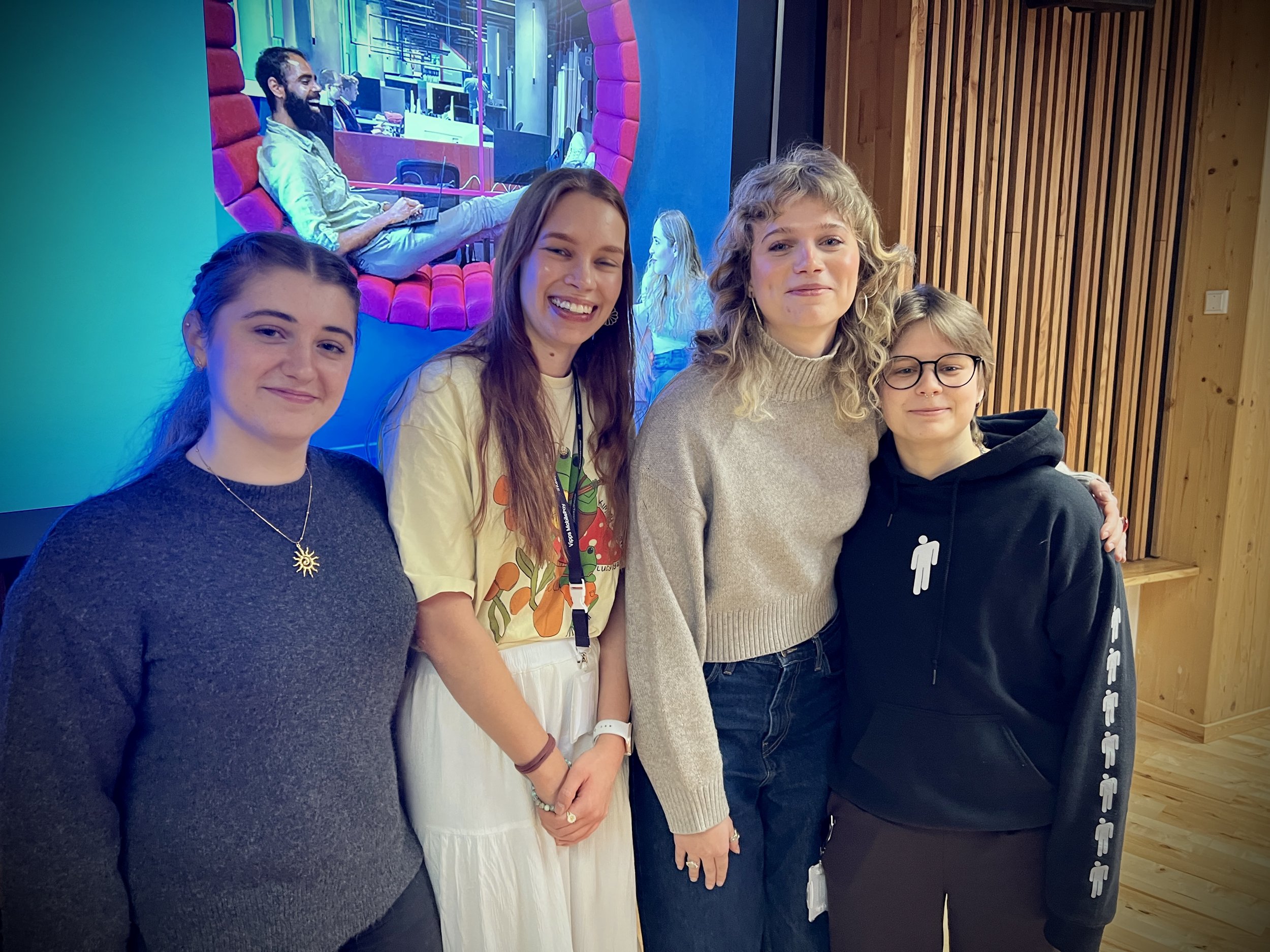
What does it take to feel you belong at work? When 16 ReDI learners visited Vipps MobilePay in Aarhus, four young employees decided to talk about more than their jobs.
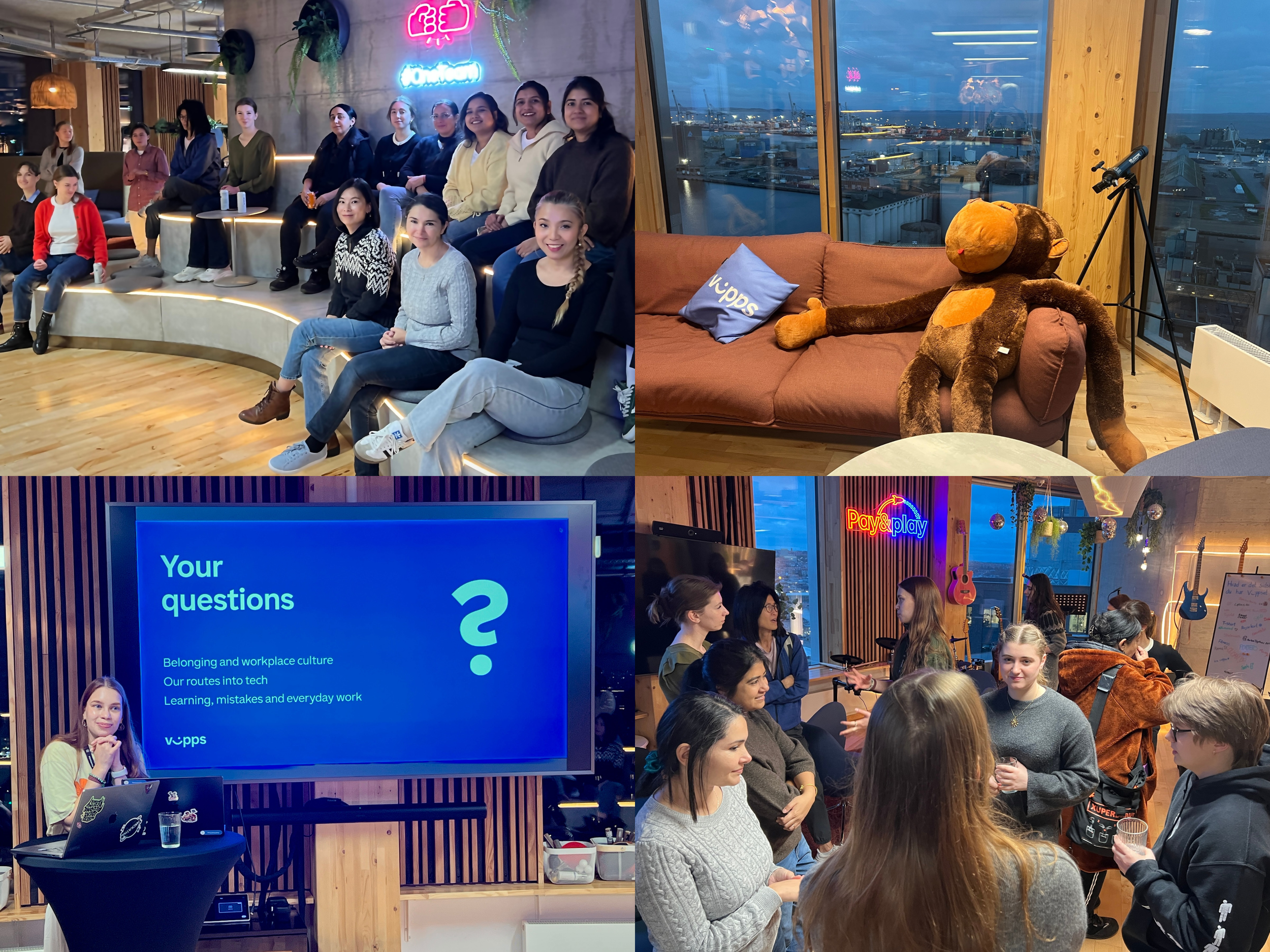
On the 17th floor of a high-rise overlooking the harbour and city of Aarhus, the atmosphere is anything but corporate. There is a lounge area, table tennis, darts, enough instruments for an entire band – and an enormous stuffed monkey relaxing on the sofa.
Welcome to Vipps MobilePay, where around 90 employees from nine different nationalities work in an environment that seems to take informality seriously.
For 16 women from ReDI School Aarhus, visiting the company's offices was an opportunity to get a closer look at working life in the Danish tech industry. But the four employees hosting the visit had something else in mind, too.
Rather than simply introducing the company, they took turns sharing personal experiences and addressing issues they felt mattered.
Do I really belong here?
Bianca Buzdugan, originally from Moldova, talked about imposter syndrome – the feeling that you don't quite deserve your place, even when you have earned it. And about the uncomfortable question of whether you were hired for your skills or simply to improve a company's diversity statistics.
Nat Wajda, who is from Poland and identifies as non-binary, spoke about respect, feeling included and the importance of being able to show up at work as yourself.
Madalina Chelaru from Moldova, described coming from a culture where speaking up was not really encouraged. As the only woman on her team when she started, she had to tell herself to voice her opinions – even when they weren't fully formed.
“People actually respect you more when you're a little more disagreeable,” she says.
And Juli Furjes, an AI Engineer originally from Hungary, talked about daring to apply for jobs that seem out of reach. When she applied to Vipps MobilePay, she could hardly believe the opportunity was real. After completing a test, she received a call from the team leader – and hung up, thinking it might be a scam.
Today, she is part of the team.
From girl to girl
Juli was the driving force behind the visit. She had known about ReDI School for some time and had considered volunteering while searching for work herself.
When she joined Vipps MobilePay, she saw another opportunity: to use her new workplace to connect with women trying to enter the Danish job market.
"I also want to create awareness about ReDI among my colleagues. We are already quite open-minded when it comes to diversity, but you can always do more," she explains.
For Juli, however, the visit was not primarily about promoting her employer.
"It's more like from girl to girl," she says.
She hopes the learners will recognise that uncertainty is something many people share – including those who appear confident and successful. At a previous job, where she was the only woman among around 30 men, she eventually admitted to a colleague that she felt like an imposter.
His response surprised her: "Oh, we all do."
That experience has stayed with her. She wants to encourage others to talk openly about their doubts, ask questions and dare to try.
A workplace where mistakes are shared
The four hosts also introduced the visitors to a workplace culture that challenges some familiar ideas about professional life. At Vipps MobilePay, employees have a dedicated channel for sharing their mistakes, and hackathons are part of the working environment.
For the ReDI learners, the informal atmosphere was striking. Several commented that the workplace was very different from what they had expected.
And the presentations sparked conversations that continued over bagels afterwards, with learners discussing diversity, inclusion and their own experiences.
Sometimes a visit opens a door
Among the people attending was Giulia Ivan, a former ReDI learner who now works at Vipps MobilePay. She remembers visiting Grundfos during her own time at ReDI and knows from experience that company visits can lead to valuable professional connections.
Another participant, ReDI alumna Fatima Tokmak from Ukraine, described ReDI events as a unique space for women to build networks and feel comfortable sharing experiences.
Both are reminders that the value of a company visit extends beyond the hours spent inside an office.
For Juli, the hope is simple: that the women leave with more confidence, a better understanding of the Danish workplace – and perhaps some friendly faces they can reach out to.
Because sometimes the first step towards finding your place is discovering that even the people who seem to belong have had their doubts.