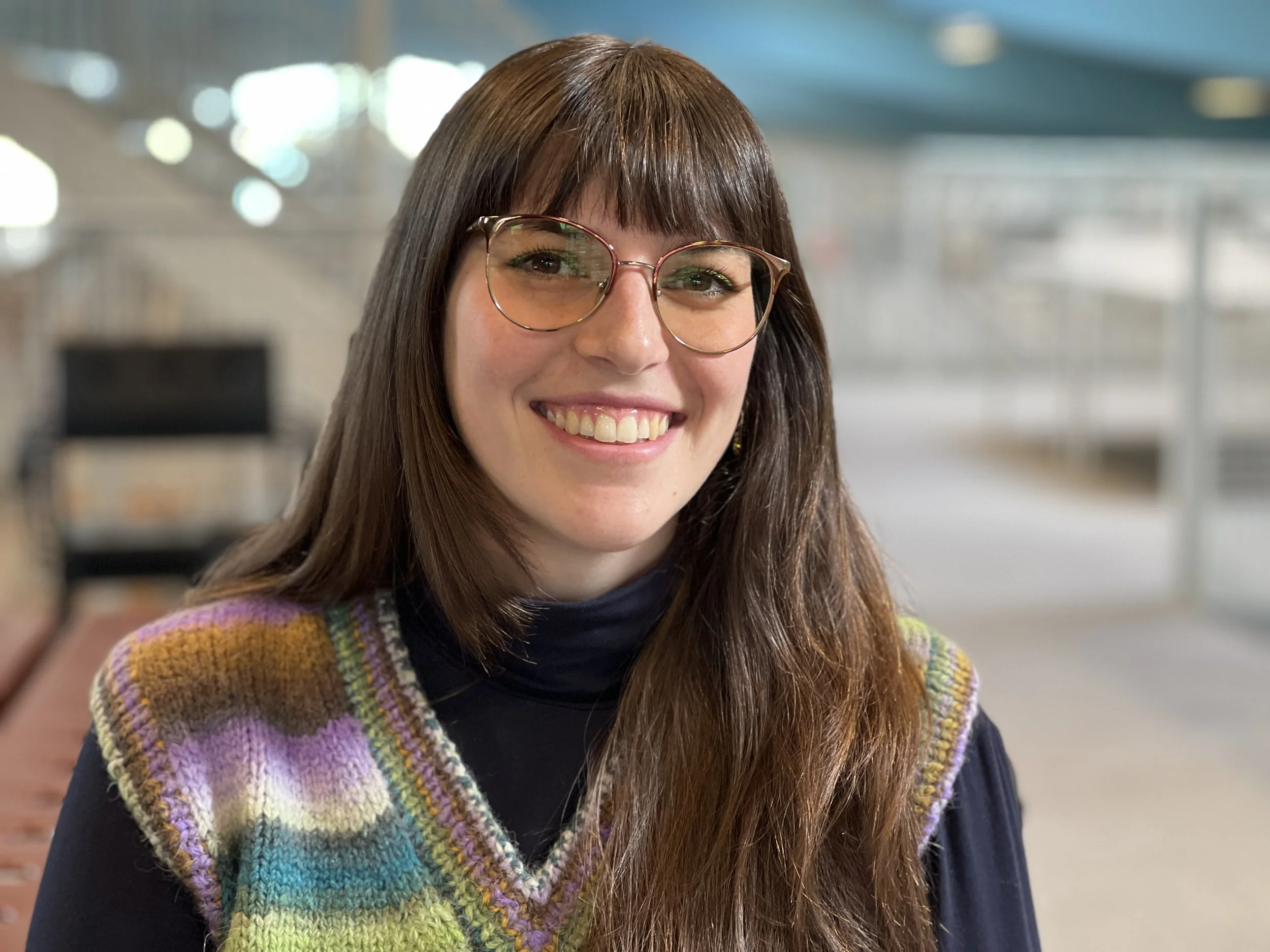
Meet Pelin Ordanuç, Community Lead at ReDI School. With a background in social work and a master's degree in Advanced Migration Studies, she has researched the challenges that highly educated women are facing coming to Denmark as accompanying partners. Today, she combines her academic insights with hands-on experience, helping learners and volunteers build a community where everyone has a chance to participate.
What do you do at ReDI?
I'm the Community Lead for our tech learners and tech volunteers in Copenhagen and covering Aarhus (in some aspects) as well. My job is to make sure everyone has a good journey with ReDI, from recruitment and onboarding to the courses, career coaching and graduation.
That means a lot of communication, coordination and making sure everything runs smoothly. I'm also the person people can turn to when they have questions or need support, working closely with my colleagues, of course. I love being part of the community myself, welcoming people when they arrive and seeing how they develop along the way.
What drives you?
I think it's about justice. We may have equal rights on paper, but there are still so many invisible barriers preventing people from actually making use of those rights.
I'm a trained social worker from Berlin, and I came to Copenhagen two years ago to do my master’s in migration studies. I wanted to work not only with supporting migrants on a practical level, but also with the systems and structures that shape their opportunities.
When I arrived, I couldn't find a student job myself. Eventually, Lill at ReDI helped me become a volunteer teacher. Later, I did an internship, became a student worker and finally joined the team full-time. Having someone who saw my potential and opened a door meant a lot to me. Being able to offer that kind of support to others is what drives me.
What have you learned along the way?
To trust the process.
I'm normally someone who likes to have everything structured and under control. But working with volunteers has taught me that sometimes you have to give people space.
Our volunteers have so much endurance and dedication. They come straight from their jobs to teach in the evening, and even when the classes are over, they often stay to talk with the learners.
They bring their own professional experience and ideas, and that is something we should make room for. Of course, they need structure and guidance, but they also need freedom within that framework.
When you allow people to contribute in their own way, wonderful things can happen. And because our teachers work in the industry, they help us keep our courses relevant as technology and the labour market change.
What do you care about?
I care deeply about how our society is based on participation. The fact that people in Denmark see their own responsibility in shaping our society and want to contribute means a lot to me. That is also what I see within ReDI.
But that doesn’t mean that everyone has a real opportunity to do so. For my master's thesis, ‘The Invisible Plus One’, I interviewed ReDI community members about their experiences of coming to Denmark as accompanying partners. Many are highly educated women with years of professional experience themselves. They are allowed to live here, but without a job of their own and dependent on their partners, that doesn't mean they feel part of society. Some described it as looking through a glass window – being able to see everything, but still feeling outside.
What struck me was how this affects not only their financial independence but also their professional identity and sense of autonomy.
We as a society expect people to participate. But then we also have to give them the opportunity to do so.
Why ReDI?
Because we don't just offer courses. We create a community where people can support each other, develop their skills and find new opportunities.
What makes ReDI special is that we give people room to contribute their own ideas. Our volunteers bring knowledge from the industry, our learners tell us what they need, and together we can keep developing what we offer. I also think ReDI is good at showing companies that supporting international talent brings valuable skills, experience and perspectives to their teams. Companies can benefit very much from that.
And perhaps most importantly, we help people realise that struggling to find a job doesn't mean they have failed as professionals. These are structural barriers, and they shouldn't have to face them alone.
Pelin in short
Pelin Ordanuç, 28
From: Germany, with a Turkish-German background
Education: Trained social worker; Master's degree in Advanced Migration Studies
At ReDI since: Spring 2025 as a volunteer teacher; student employee from February 2026; Community Lead since October 2026
Role: Community Lead, Copenhagen